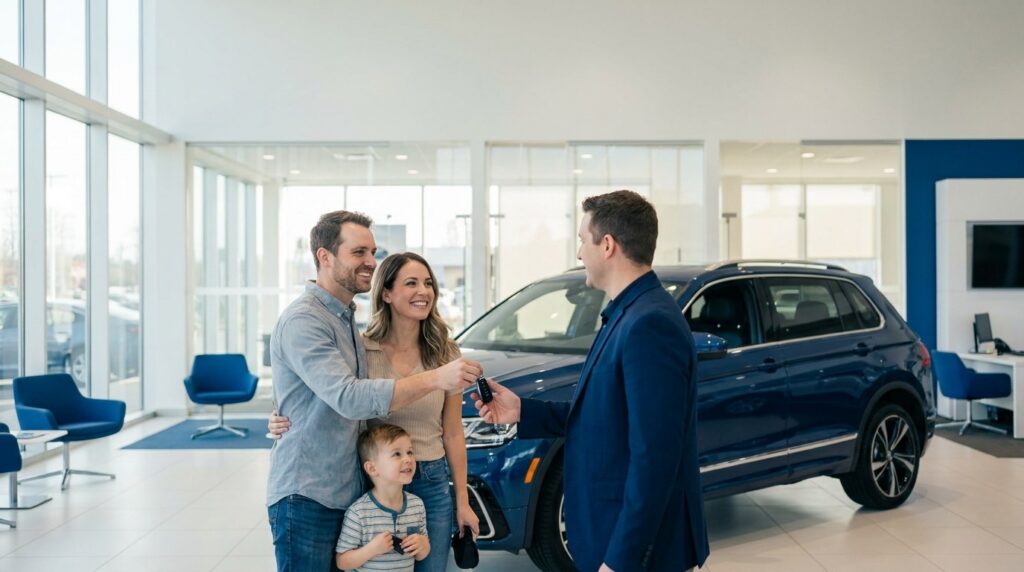
Here are two retention numbers from the same 100 rooftops, and the distance between them is the whole story.
Customers who bought a car: 12.5% did another deal at that store within three years. Customers whose lease matured: 29% re-transacted in the months around maturity.
Three full years against a roughly 18-month window, and the lessee still comes back at more than twice the rate. Leasing isn’t a finance product. It’s a retention product with a car attached.
The richest used car in the dataset
Start with the car itself. When a store re-acquires its own lease return and retails it, that unit grosses $2,884 on average. The average used car grosses $2,007. The average trade-in, $2,237. Nothing else on the lot touches the lease return: guaranteed one-owner, complete service history, known miles, and it was spec’d by your own market three years ago.
The recon story from Article 3 applies double here. You didn’t just service this car. You originated it, you know the customer, and you know the day it’s coming back.
The capture problem
Now the uncomfortable number: of 86,349 leases that matured across these stores, only 20.1% of the vehicles came back through the store that wrote the lease.
And that’s a floor. Roughly half of lease returns are grounded and swept away by the lessor without the store ever seeing a trade record. The bank knows the car is coming. The customer knows. The only party routinely surprised by a lease maturity is the dealership that originated it.
The window: 75% to 90% of term
The timing is knowable to the day, and the data says the best moment comes before maturity, not at it. Lease-end equity builds as the term runs down: by the 75-to-90% mark, most lessees are sitting in positive equity, and they haven’t started shopping yet. At maturity, every competitor gets the same shot at them.
Pull-ahead outreach in that window does two things at once: it recaptures the car early, and it puts the customer in the next one before anyone else asks.
The flywheel
Here’s what makes the lease lane different from every other acquisition channel: the car comes back and the customer stays. Of the lessees who re-transacted, six in ten leased again, which means the same conversation repeats in another 36 months. Car, customer, car, customer. Every cycle feeds the used lot, the F&I office, and the service drive at once.
The auction sells you a car. The lease return hands you a car, a customer, and an appointment three years out.
Next up
Service drive, equity positions, lease maturities: three pipelines, all sitting in the database the store already owns. Next week, the operating model that turns them from a report into a funnel, and what it takes to run it.
This series is built on real DMS data: 250,677 trade-ins, 371,227 used retail sales, and 86,349 lease maturities across roughly 100 rooftops, 2024–2025. Every “keep” rate we publish is matched same-store only, which means the true numbers are higher than what we print.