
A customer passes on their equity offer. What your software does over the next twenty months is the whole difference.
A customer opens the equity offer you sent, looks at the number, and says they’re not interested.
Go find out what your software does next. In most equity mining tools the record stops moving. Some put it back in the queue on a 90-day timer, so the same customer gets the same offer in October that they turned down in July.
When they say no, you’re now on repeat and that leads to future opt-outs.

The Other Seven Years
People hold vehicles past eight years. The stretch where somebody is genuinely movable on a trade is a thin slice of that.
Look at what’s in the rest. The 40,000 mile service and the 60,000. A powertrain warranty running out on a date nobody has mentioned since delivery day. The first real repair after coverage is gone, which usually decides whether they keep driving to you or find a shop closer to work. An insurance renewal every twelve months. Tires. A battery. A timing belt at 90,000.
None of that needs the customer to be ready to trade. All of it is money.
Five Gears, and Sales Is One of Them
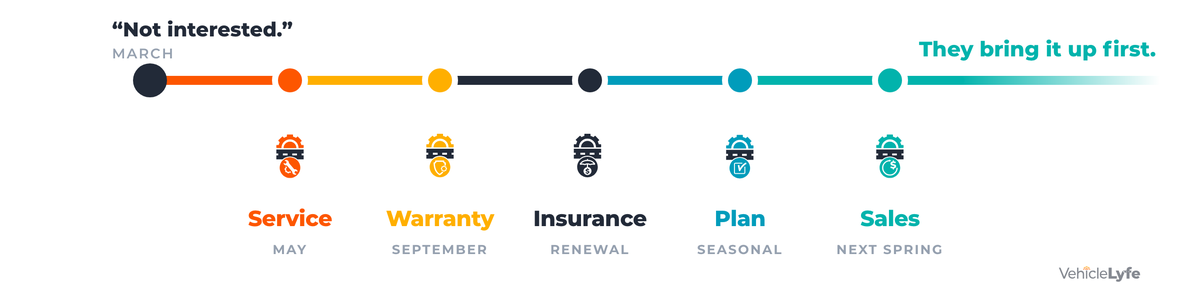
VehicleLyfe runs on Service, Sales, Helping them Plan, Warranty, and Insurance. A customer who shifts out of Sales hasn’t left the system, and there’s work to do in the other four.
We keep them on their maintenance interval. We know the date their factory coverage expires, which is an F&I conversation your competitors aren’t having, mostly because they don’t know the date either. Their insurance renews. Their equity position keeps moving whether or not anyone is watching it, so they get a seasonal report showing where they actually stand.
The customer who said no in March is in your service lane in May. In September you’re talking to them about coverage that’s about to run out. The following spring, the number on their report has moved enough that they’re the one who brings it up.
Why the Follow-Up Pays for Itself
In our network’s data, service and sales aren’t two relationships that happen to share a customer. The people who keep bringing the vehicle back are the people who eventually trade it in with you.
So the revenue in the meantime and the deal you’re waiting on aren’t a tradeoff. They’re the same activity. You’re not settling for RO gross while the real opportunity sits on ice.
“We have found the more customers invest in a dealership, the more likely they are to return for more maintenance and more vehicle purchases”
A tool that stops at no loses the follow-up. It also loses what would have changed the answer.
See What Your Customers Do After They Say No
VehicleLyfe keeps every declined customer producing revenue while their equity position matures. Loyalty is on the horizon.