
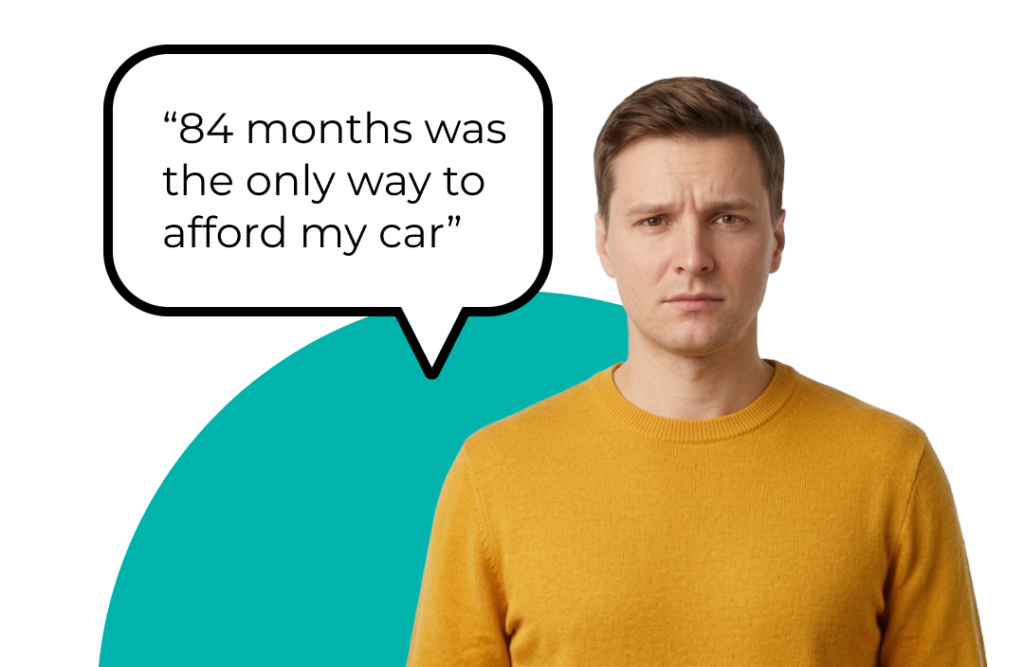
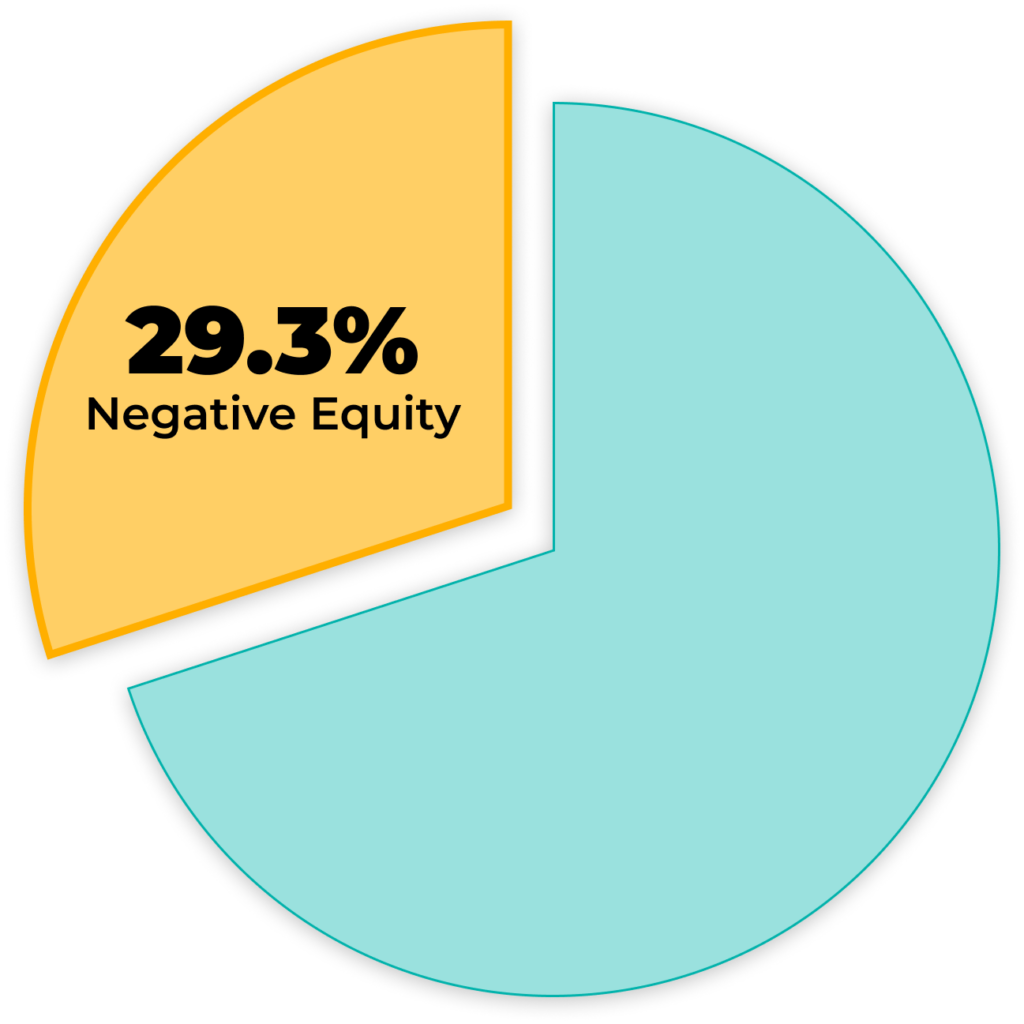
Negative equity has become one of the most powerful forces reshaping the retail automotive industry, colliding with an already-serious loyalty crisis. Edmunds’ Q4 2025 Insights show that 29.3% of trade-ins toward new-vehicle purchases carried negative equity, the highest share since Q1 2021, with an average of $7,214. More than one-quarter of those underwater customers owed at least $10,000, and nearly one in ten owed over $15,000, making it far harder to get out of their current vehicle and into another.
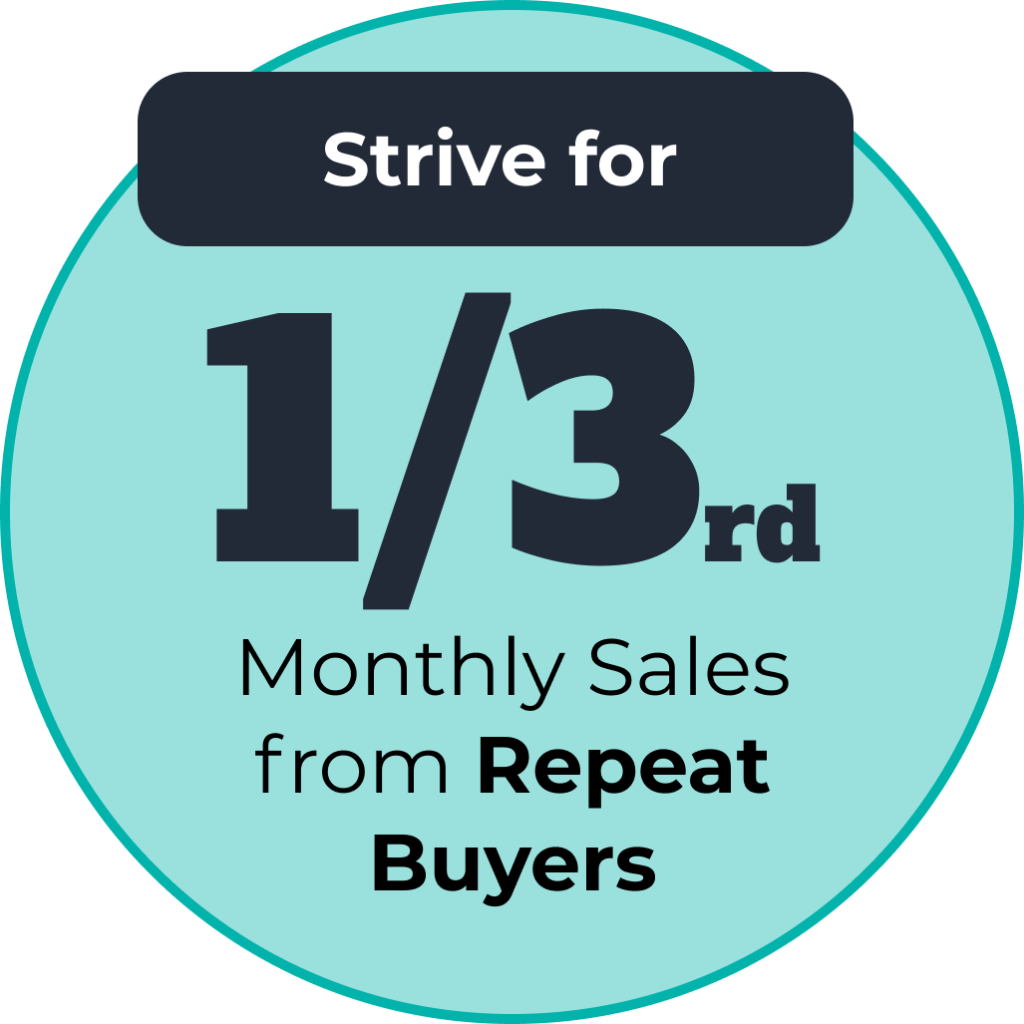
At the same time, dealership loyalty is falling. VehicleLyfe data shows customer loyalty dropped 12% in 2024, with roughly 20% of dealership sales coming from repeat customers, well below the one-third benchmark considered healthy for long-term sustainability. As repair costs, vehicle prices, and payments rise, many customers feel trapped in their current situation and are less inclined to return to the same store.
Pandemic-era buying conditions fueled this, as many customers stretched to longer loan terms, paid elevated prices, and, in some cases, rolled in prior negative equity, creating loans that are difficult to unwind. When these customers return to the dealership and discover that their equity position prevents them from getting the car or the payment they expected, they feel frustrated and believe the system is stacked against them.
This reality puts pressure on sales and F&I. Deals take longer to structure, more customers are told “no” or offered terms they perceive as unattractive, and front-end and F&I profit opportunities shrink as managers fight to keep payments manageable. The emotional fallout lands on the dealership, even when macroeconomic factors or prior buying decisions created the situation.
Nearly 30% of your customers are underwater. Now what?
Negative equity is not just a financing problem; it is a loyalty problem. VehicleLyfe’s analysis of more than 3 million dealership records shows that loyalty among dealership customers fell by 12% in 2024. A healthy dealership’s monthly sales include 33% (one third) from loyal customers. In Q4 of 2024, this was trending to only 20%. Rising repair bills, higher vehicle prices, and the perception that dealers “made money while customers paid the price” have eroded trust.
This gap between sporadic, sales-driven communication and what customers actually need — continuous guidance on ownership, risk, and options — reinforces the perception that dealers do not truly care about the relationship. At the same time, acquiring new customers remains far more expensive than retaining existing ones; NADA data show that acquiring a new customer costs seven times as much as reactivating a prior buyer. In a world where nearly 30% of trade-ins are underwater, failing to invest in loyalty is a direct hit to future profitability.
-
At the dealership
They discover they are much deeper underwater than expected and cannot get into a new vehicle without a substantial increase in payment or a large down payment.
-
After they leave the dealership
They feel blindsided, believing the dealership “let them” get into a loan that was destined to trap them.
-
The longer relationship
They are contacted only when the dealership wants to sell them something, not when the store could have guided them through ownership decisions that might have reduced risk.
Winning customers back in the era of the Payment Prisoner
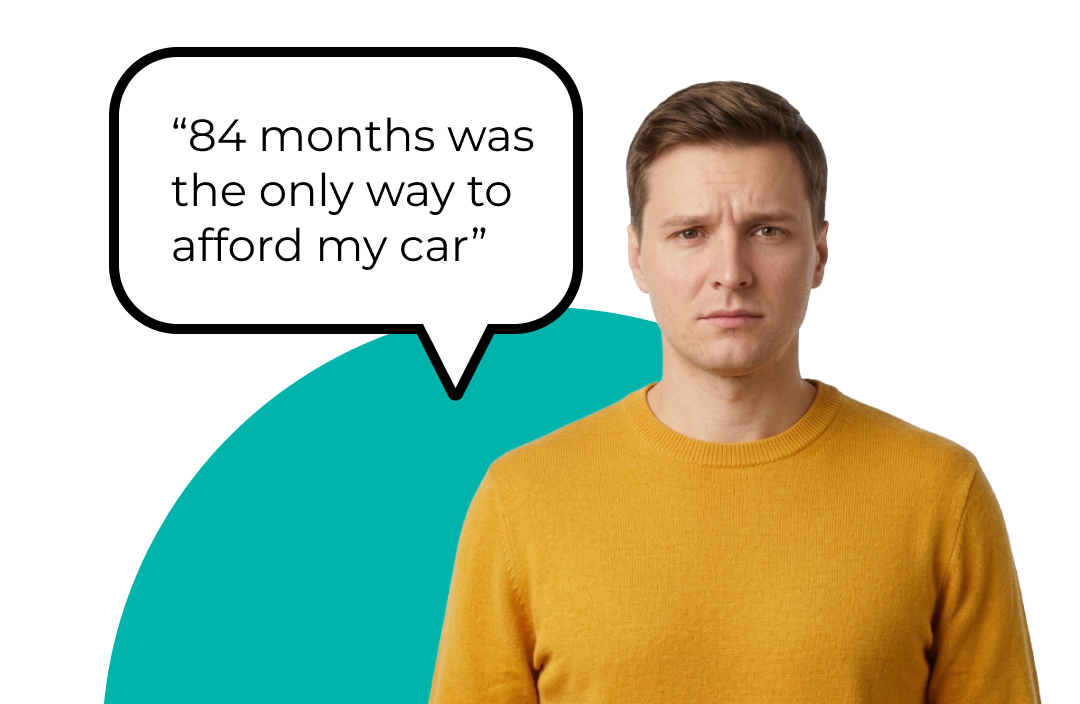
Payment Prisoners
Customers stuck in a vehicle they cannot comfortably afford to exit without bringing substantial cash or accepting an even higher payment.
To thrive in this environment, dealers must evolve from simply selling vehicles to guiding ownership. In the traditional model, the dealer’s engagement spikes around key transactions — the sale and occasional service visits — and then drops off dramatically. This leaves customers largely on their own to navigate complex questions about equity, warranties, service schedules, and insurance.
In an ownership-guide model, the dealership:
- Monitors each customer’s ownership journey, including mileage, service history, contract expirations, and estimated equity position.
- Proactively surfaces timely, relevant advice, such as when a service contract is about to expire, when a high-cost repair may justify evaluating trade options, or when equity is improving.
- Communicates regularly even when a purchase is not imminent, reinforcing that the store cares about the customer’s long-term experience, not just the next deal.
The problem is that manual follow-up and ad hoc equity mining cannot scale to thousands of customers per rooftop. Most stores lack the staff and bandwidth to continuously analyze equity positions, service events, and contract timelines for every owner in their database. Dealers need automation and intelligence to deliver this guidance reliably.
Becoming a Trusted Guide to customers
Negative equity does not have to be a dead end; it can be reframed as a situation that calls for structured, transparent options. Edmunds’ Q4 2025 insights emphasize how easily negative equity can become a difficult-to-break cycle, especially when customers repeatedly roll balances into new loans. Without proactive guidance, customers often arrive at the dealership only when the problem is already acute.
VehicleLyfe helps dealers address this by:
- Identifying which customers are likely to be in or near negative equity based on loan terms, time in contract, and estimated vehicle values.
- Triggering communications that set realistic expectations before a customer even submits a lead or walks into the showroom, such as highlighting how much they still owe relative to typical market values.
- Guiding customers toward clear paths, which may include: continuing to drive and maintain the vehicle while waiting for equity to improve, leveraging service contracts to avoid major out-of-pocket repair costs, or planning for a future trade when certain thresholds are met.
Because these messages carry the dealership’s brand and are delivered over time, the customer experiences the store as a coach helping them navigate a tough financial situation, not as the party responsible for it. This shift in perception is critical to maintaining loyalty among payment prisoners.
Keeping in touch outside the dealership
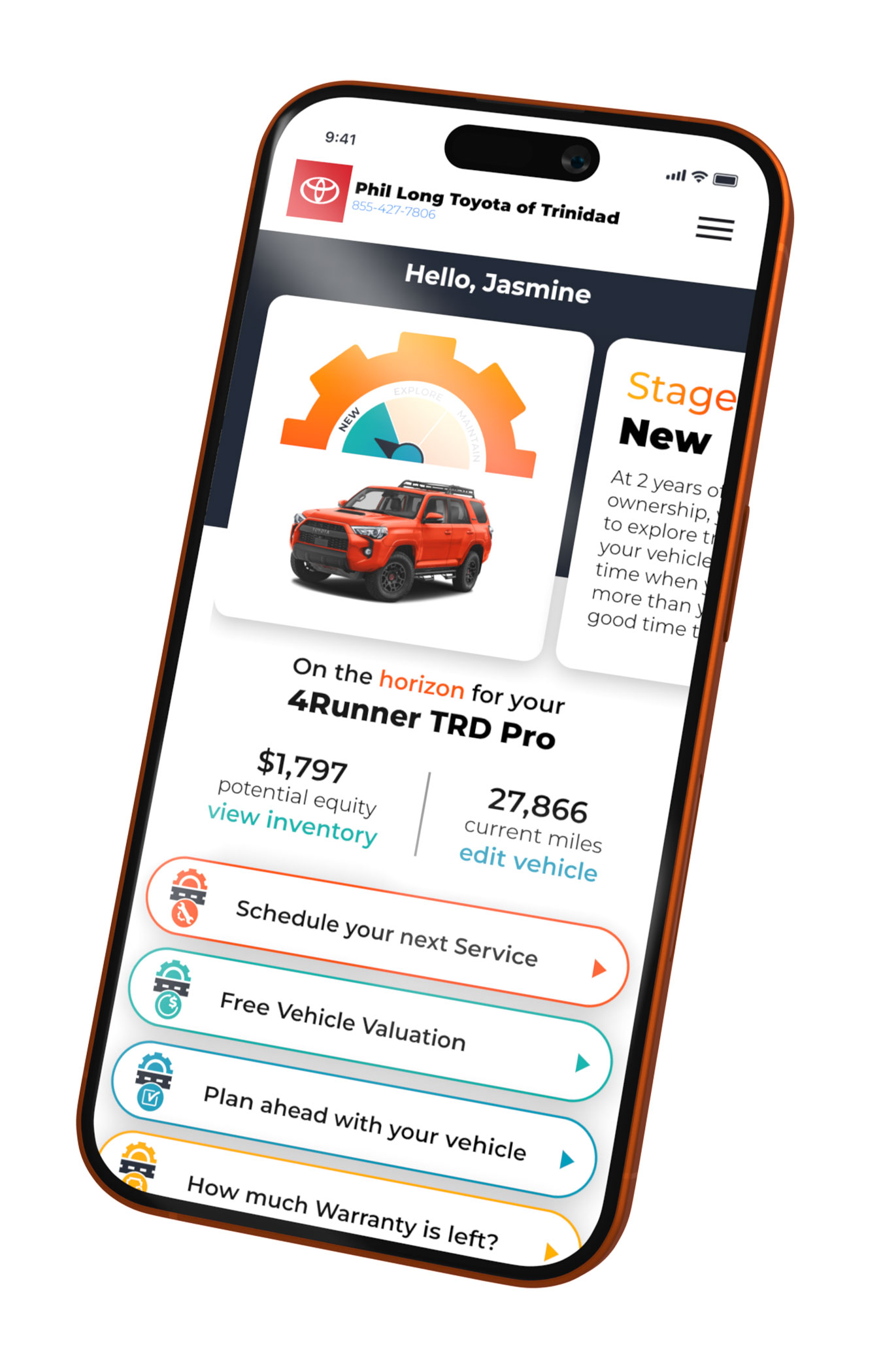
VehicleLyfe is built specifically to help dealers become ownership guides at scale. The platform connects to dealership management and related systems, analyzes customer records, and generates a personalized “ownership gameplan” for each customer, covering what to do next with their vehicle — whether that is servicing, planning for repairs, considering a warranty, or exploring a sale or trade.
By providing an always-on communication layer and a game plan for each customer, VehicleLyfe enables dealers to maintain continuous contact, build trust, and position themselves as partners in ownership rather than as occasional salespeople.

As negative equity grows, F&I faces a dual challenge: customers are more payment-sensitive and skeptical, but dealers still need to protect front-end and back-end profits. Rolling negative equity into the next car pushes monthly payments significantly above budget, leaving less room for additional products. At the same time, repair costs have risen sharply — the average service visit has increased from $283 in 2019 to $521 in 2025, with high-mileage vehicles at nearly $700 per visit.
VehicleLyfe supports a different approach to F&I by:
- Pre-selling the value of protection products over the life of the loan, rather than during a single, pressured conversation in the F&I office.
- Highlighting coverages at the time of real service events, reinforcing their value when it matters most.
- Framing F&I products as tools to preserve options and protect future equity by reducing the risk of catastrophic repair bills that might otherwise force a distressed trade or additional borrowing.
When customers see protection products as part of a strategy to keep them in control — rather than as add-ons that inflate payments — dealers can sustain F&I penetration and profit even among customers who are or will become underwater.

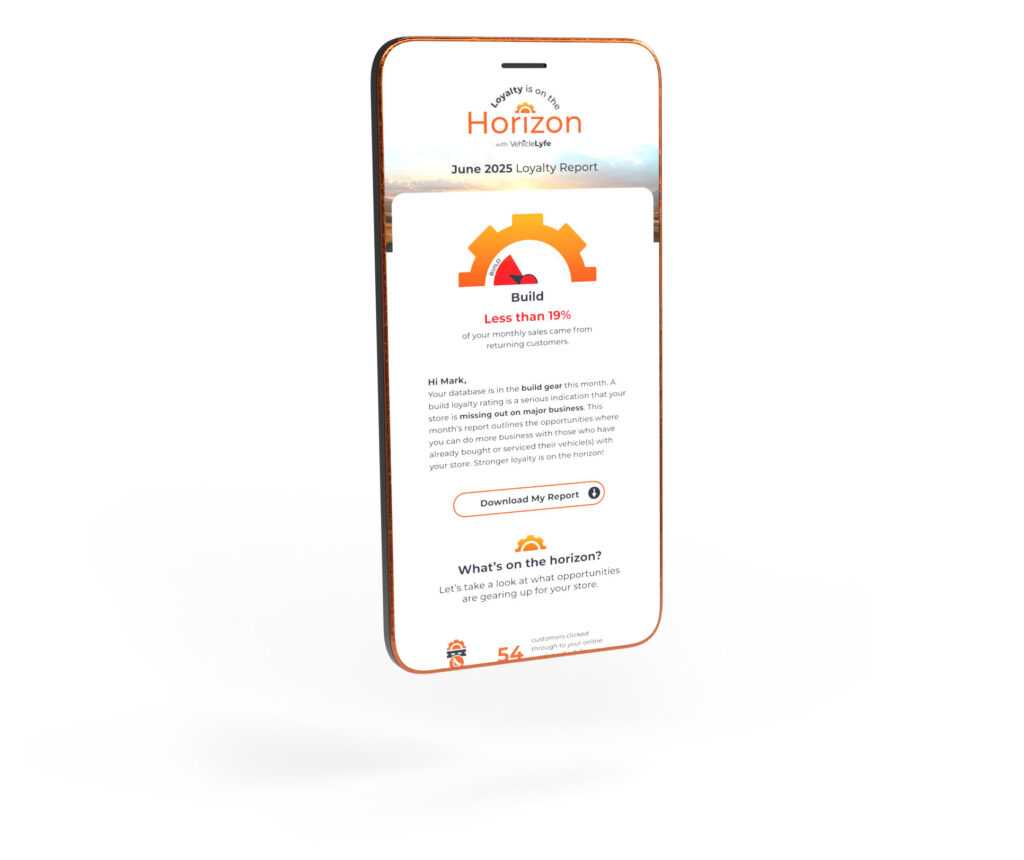
Historically, many dealerships have not measured loyalty with the same rigor as sales volume or gross. VehicleLyfe urges dealers to treat loyalty as a core financial metric, especially in a negative-equity era. The platform classifies loyalty by tracking how many monthly sales come from existing customers and how many customers return for service, producing a clear picture of whether the store is building or losing long-term relationships.
Dealers do not need to redesign their entire operation overnight to address negative equity and loyalty. A phased blueprint can make the transition manageable.
Step 1: Connect data and establish a baseline
- Integrate DMS data with VehicleLyfe so the platform can see your actual service, sales, and contract history, and begin benchmarking your current loyalty rate and service retention levels.
- Quantify your exposure to negative equity by analyzing time-in-loan, average terms, and trade behavior over recent years.
- Analyze your lease portfolio to quantify the number of customers who will not face negative equity so you can target them with early pull-ahead offers.
Step 2: Configure the ownership gameplan
- Define core campaigns around key ownership milestones: early-life service, mid-term repairs, warranty and protection reminders, and potential equity checkpoints.
- Set specific rules for negative-equity messaging, such as when to educate customers about their likely equity position and when to invite them to explore scenarios.
- Align the messaging tone and offers with your dealership’s brand, emphasizing guidance and transparency over urgency and pressure.
Step 3: Automate, monitor, and refine
- Launch automated, consistent communication that covers the full ownership lifecycle, including service, key buying cycle times, and warranty decisions.
- Review VehicleLyfe’s loyalty and engagement reports monthly to see which messages resonate with payment prisoners and which need adjustment.
- Train sales and service staff to recognize customers who have engaged with VehicleLyfe content and to continue the guidance narrative in-store.
Over time, this blueprint moves the store from reactive, campaign-based communication to a continuous, data-driven ownership-guidance model.